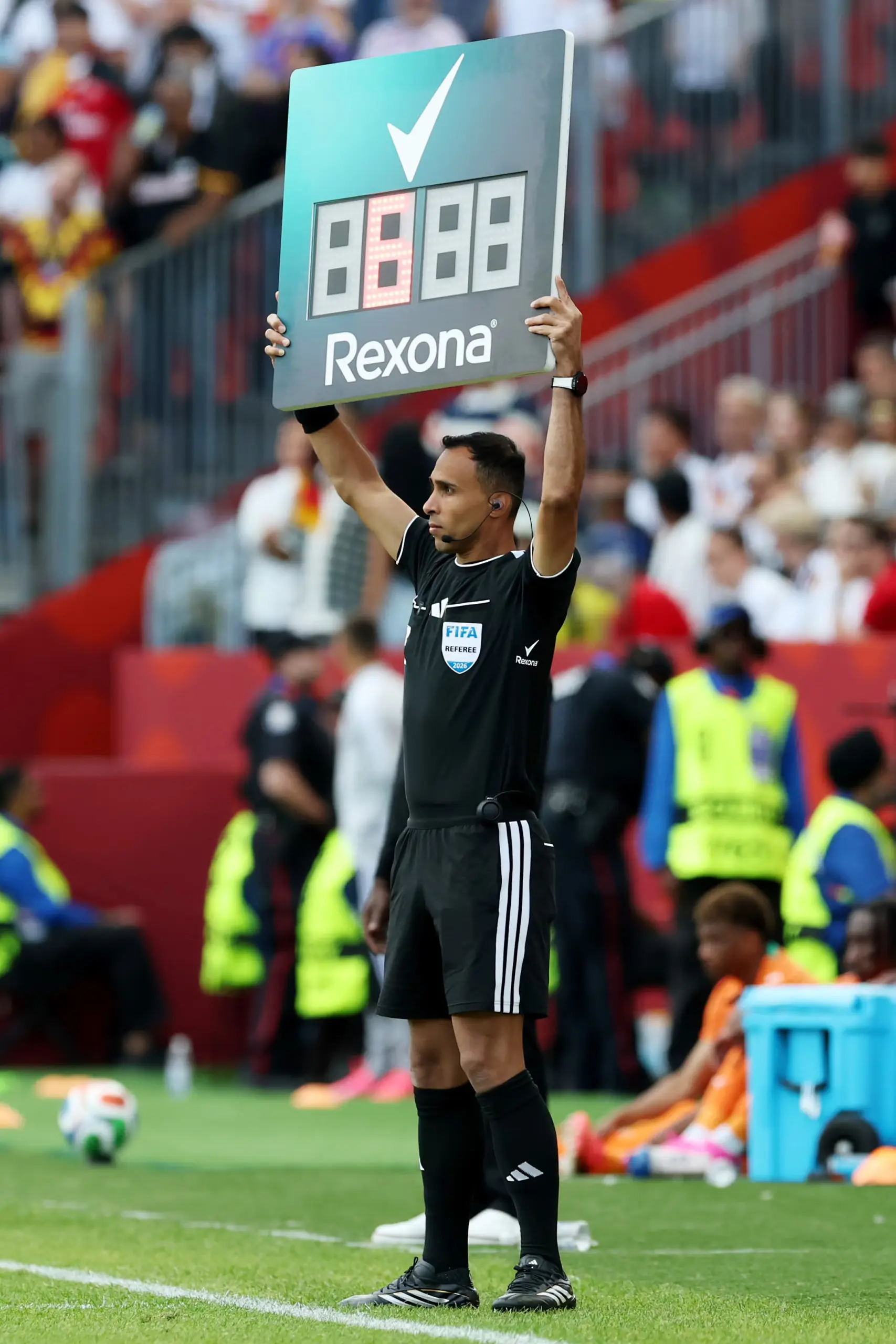
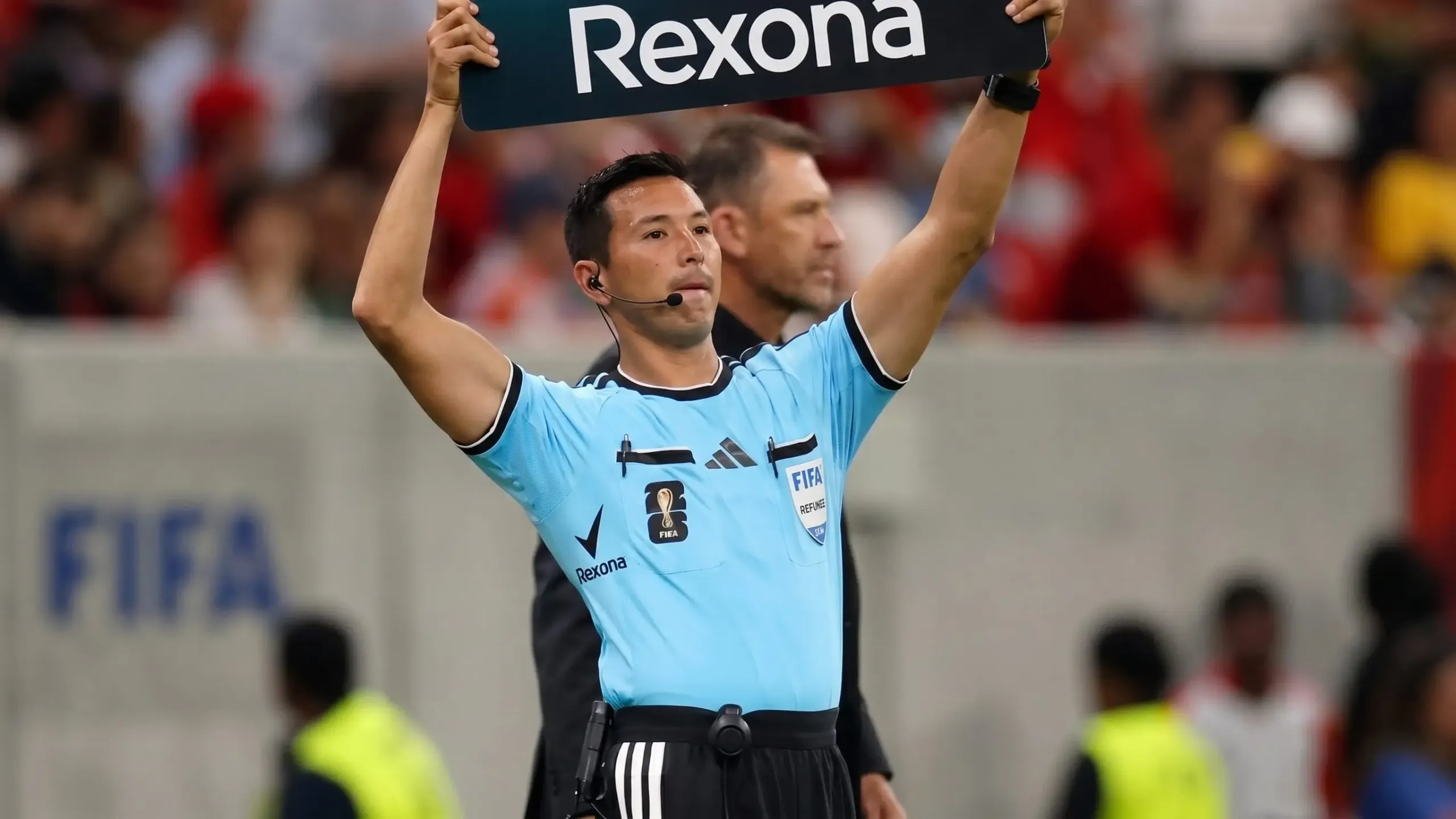
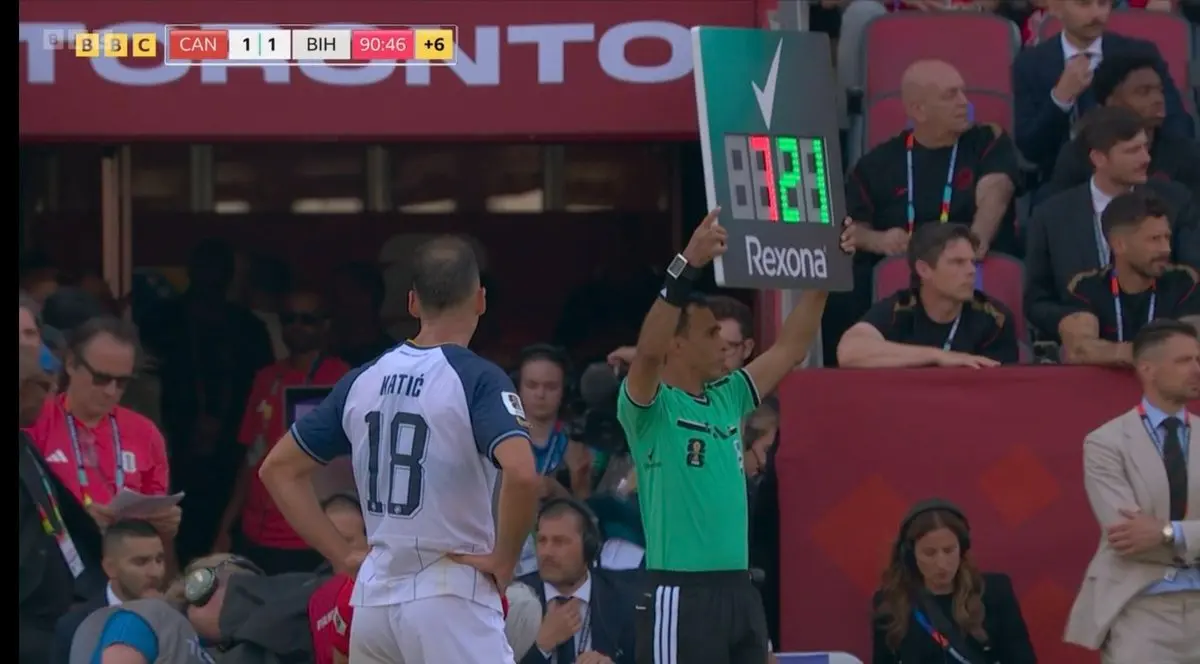
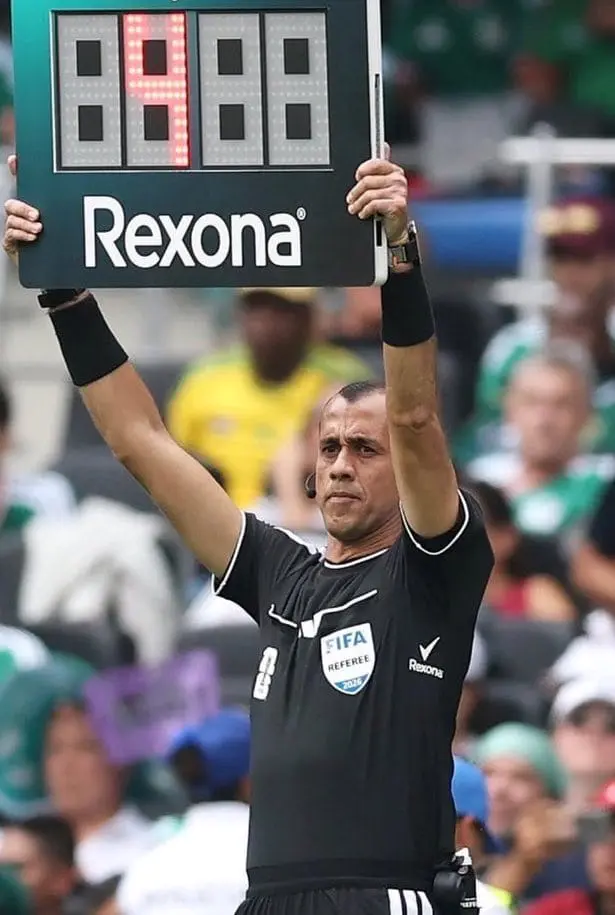
The true genius of the placement is entirely dependent on the officials’ physical movements. The strategic reveal happens during some of the most tension-filled moments of the game. When the fourth official steps up to the touchline and raises both arms to hoist the heavy electronic substitution board—signaling a crucial tactical change or indicating the agonizing amount of stoppage time added to the clock—the underside of their sleeves is exposed to the world. There, perfectly positioned in the previously unmonetized space of the referee’s armpit, the unmistakable Rexona logo flashes to an audience of billions.
What makes this activation so widely discussed isn’t just the novelty of the placement, but the psychological alignment between the brand and the real estate it purchased. Traditional sports sponsorships often rely on sheer repetition—logos slapped across stadium perimeters, printed on the front of jerseys, or inserted into lower-third broadcast graphics. While these methods generate vast impressions, they often lack a specific contextual tie to the product being sold.By choosing the armpit, Rexona actively bypassed the noise of traditional billboard advertising. They didn’t just buy space; they bought a specific, highly relevant human action. The campaign playfully acknowledges the physical reality of officiating a grueling, high-stakes football match in sweltering conditions. The fourth official is often caught in the crossfire of screaming managers and frantic touchline drama. Rexona’s global messaging, built around the promise that their antiperspirant “Won’t Let You Down” when the heat is on, connects flawlessly with the visual of a referee keeping their cool under intense pressure.
Beyond its creative brilliance, the campaign also highlights the relentless, ever-expanding commercialization of modern football. As governing bodies continuously seek to maximize revenue from tournaments, the meticulous exploitation of every conceivable inch of advertising space has become the new norm. While placing a logo in an armpit might initially seem like a humorous gimmick, it actually represents a highly sophisticated understanding of broadcast visibility and viral marketing.
By actively deciding to own the “underarm space,” Rexona transformed a historically ignored piece of fabric into one of the most talked-about billboards of the tournament. Much like Carlsberg’s ingenious use of VAR delays to serve free beer, Rexona proved that the best advertising doesn’t just interrupt the sports broadcast. Instead, it integrates so cleverly into the physical reality of the game that fans and marketers alike can’t help but applaud the sheer audacity of the idea.